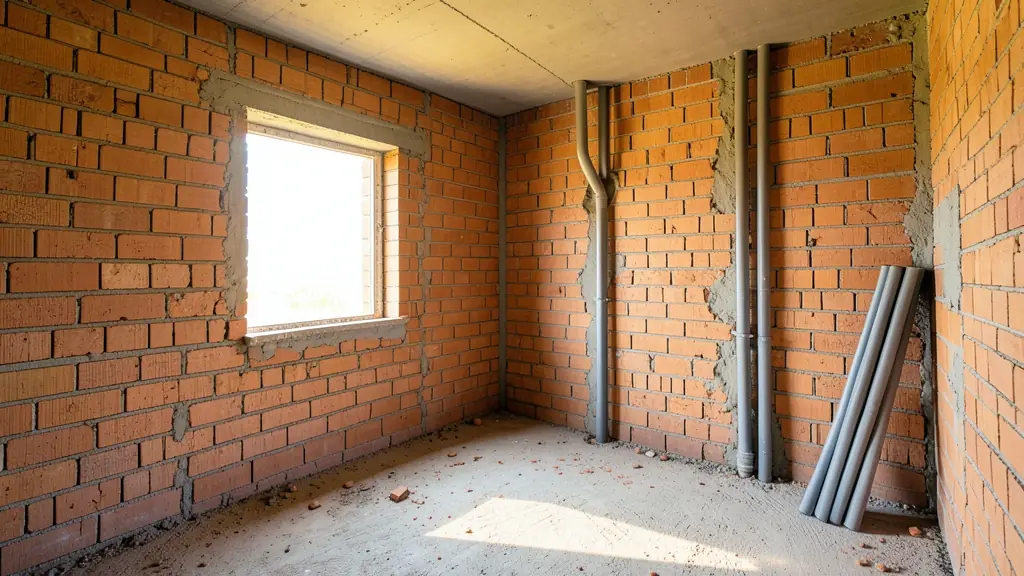
Conduit pipe is the tube that carries house wire through brick walls, concrete slabs and exposed runs, so the wiring can be pulled in, replaced or added to later without breaking the plaster open again. Most houses use grey PVC conduit, factories and plant rooms often use galvanised steel, and flexible conduit covers the last short stretch to a motor or a geyser. Here is what to buy, how much and what to watch.
Price guideAbout R18 to R35 for a 3 m or 4 m length of 20 mm PVC conduit, VAT included, and about R47 for a 4 m length of 25 mmA rough guide from published South African prices. The area, the term, the grade, what is included and VAT all move it.
PVC, galvanised steel or flexible
- PVC conduit pipe: the common choice in walls and slabs, in 20 mm and 25 mm. Light grade is fine in plastered brick; heavy grade is stiffer and survives being walked on and cast into concrete.
- Galvanised steel conduit: for exposed runs in workshops, plant rooms and parking garages where it can be knocked, and where the steel helps protect the cable.
- Flexible conduit: corrugated or covered flexible tube for the final metre to a pump, a motor or a geyser, where vibration or movement would crack rigid pipe.
Conduit pipe fittings you will need
The pipe is only half the order. Count bends (or a bending spring for PVC), couplings to join lengths, saddles to fix surface runs, draw boxes on long runs and after several bends so the wire can be pulled, wall boxes in 4 x 2 and 4 x 4 for sockets and switches, junction boxes in the roof and adaptors where conduit meets a box. Buy the same make of pipe and fittings, because one brand's coupling does not always grip another brand's pipe.
Walls, slabs and how many wires fit
In brick walls the builder or electrician chases a channel, sets the conduit and boxes, and plasters over. In a new slab, conduit is laid on the reinforcing before the pour, and a crushed or blocked pipe there is very costly to fix, so heavy grade and a check before casting pay off. Do not pack a tube full: leave space so the wires can be pulled without stripping insulation. A 20 mm pipe suits a few 1.5 or 2.5 mm² wires for one or two circuits; bigger or more cables need 25 mm. Ask the electrician what fill they work to, and see the electrical cable page for sizes.
Conduit pipe price, and the work around it
Conduit is usually sold per 3 m or 4 m length, with fittings per item, and often in bundles for a site. A quote for the pipe alone is not the job: chasing, setting boxes, plastering and painting usually cost more than the conduit. On a new build the electrical supplies list page puts it in order, and on an older home the house rewiring page covers chasing new routes.
Who asks for this
- Homeowners and tenants
- Conduit and boxes for a new plug point chased into a lounge or kitchen wall.
- Landlords and body corporates
- Replacing broken surface conduit in older flats and adding routes for sub meter feeds.
- Builders and renovators
- Bundles of PVC conduit and fittings for the slab pour and wall chasing on a new house.
- Electricians and installers
- Conduit, boxes and bends on account, split across several sites and delivery days.
- Shops, offices and restaurants
- Steel or PVC runs on the surface in a shop or office where walls cannot be chased.
- Factories, mines and plants
- Galvanised conduit along workshop walls and flexible tails to motors and pumps.
- Farms and lodges
- Heavy grade conduit through sheds, dairies and pump houses where cable needs protection.
- Schools, clinics and municipalities
- New classroom wiring routes and surface conduit in halls with face brick walls.
Frequently asked questions
What is a fair 20mm conduit pipe price?
Compare per length, not per bundle, and check that both quotes are the same grade and length (3 m or 4 m). Add the fittings and delivery before deciding which supplier is cheaper.
Is electrical conduit pipe the same as plumbing pipe?
No. Electrical conduit is made for cable, with smooth inside walls and matching boxes and fittings. Plumbing pipe has different sizes and fittings and should not be used for wiring.
Can surfix go in conduit?
It can in some places, and electricians often pull surfix through conduit in walls. Single core house wire must always be in conduit. The electrician decides what goes where.
Who installs conduit?
Often the builder chases and sets it, and the electrician plans the routes and pulls the wire. Ask that the electrician signs off the layout before plastering. We pass requests to suppliers and electricians; we install nothing.