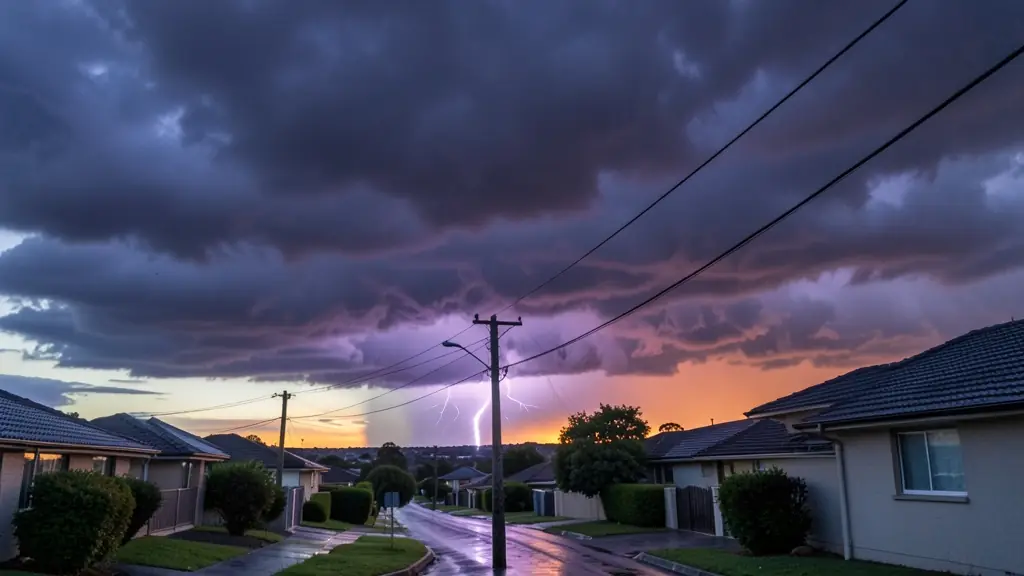
A surge protector diverts a sudden spike of voltage to earth before it reaches your electronics. In South Africa the spikes come from two places: summer lightning hitting lines or ground nearby, and the power coming back after load shedding with a jolt. Gate motors, alarm panels, routers, TVs and inverters are the usual casualties. Good protection works in layers, starting in the DB and ending at the plug.
Price guideQuoted on requestThe area, the size, the term and what is included change the price too much for a fair published range. Ask two or three businesses to quote the same brief.
Layer one: the surge arrester in the DB board
A surge protector for the DB board clips onto the DIN rail and protects every circuit at once. Type 1 arresters handle the heavy current of a nearby strike and suit farms, houses on overhead lines and buildings with a lightning conductor. Type 2 is the common household and shop arrester for induced surges and switching spikes. Three phase supplies need a three phase surge protector covering each phase. It takes ways in the DB board and is fitted by a registered electrician.
Layer two: plug surge protectors and multi plugs
A plug surge protector or a multi plug with surge protection guards what is plugged into it: the TV, the decoder, the router, the computer. Look at the joule rating: in plain words, how much surge energy it can soak up before it is worn out. Higher is better for expensive gear. Do not daisy chain multi plugs, and see extension cords for leads.
They wear out, and they need an earth
Every surge an arrester absorbs uses up part of its life. Most DB arresters show a small coloured flag that changes once the unit is spent, and many owners only notice after the next storm kills the gate motor. Check it after big storms. An arrester sends the surge to earth, so with a corroded or missing earth spike it has nowhere to send it and protects very little. Ask the electrician to test the earth when fitting one. Sizing an inverter too? The inverter size calculator lists the loads you are protecting.
Solar, gates and alarms
Solar panels on the roof need DC surge protection on the panel side of the inverter, as well as AC protection on the output. Gate motors and alarm panels with long cable runs to the street pick up surges easily, so they often get their own protector. Surge protection is not a roof lightning protection system; it reduces damage from surges, it does not stop a direct strike.
Who asks for this
- Homeowners and tenants
- A DB arrester plus plug protectors after a storm took out the TV and the router.
- Landlords and body corporates
- Arresters in each unit's board so gate and intercom repairs stop every summer.
- Builders and renovators
- A type 2 arrester written into the board schedule for every new house.
- Electricians and installers
- Arresters on account for solar and backup jobs, AC and DC sides both.
- Shops, offices and restaurants
- Protection for tills, card machines, servers and the alarm panel.
- Factories, mines and plants
- Three phase arresters on main and sub boards feeding controls and VSDs.
- Farms and lodges
- Type 1 protection where long overhead lines feed pumps and cold rooms.
- Schools, clinics and municipalities
- Protecting school computer labs and clinic equipment on exposed sites.
Frequently asked questions
Is a surge protector in the DB board enough?
It handles most of the energy, but sensitive gear far from the board still benefits from a plug protector. The two layers work together.
Does surge protection help after load shedding?
It helps with the spike when power returns. Switching off expensive appliances during load shedding and turning them on a few minutes after the power is back also helps.
How do I know a surge arrester is still working?
Check its indicator window; red or a flag showing means it is spent and must be replaced. Plug protectors often have a light that goes out. Read the warranty, as some cover connected equipment.
Who will quote me?
Electrical wholesalers and registered electricians near you. We pass on your request and sell no surge protection ourselves.
Related topics
Work it out first
- Cable size calculatorLoad, length, phase and how the cable is run in: the cable size in mm² and the voltage drop out
- Breaker size calculatorAppliance watts or amps and the supply in: the current, the breaker rating and the cable usually used out
- Inverter size calculatorThe appliances that must run in an outage in: the running load, the peak when motors start and the inverter kVA out