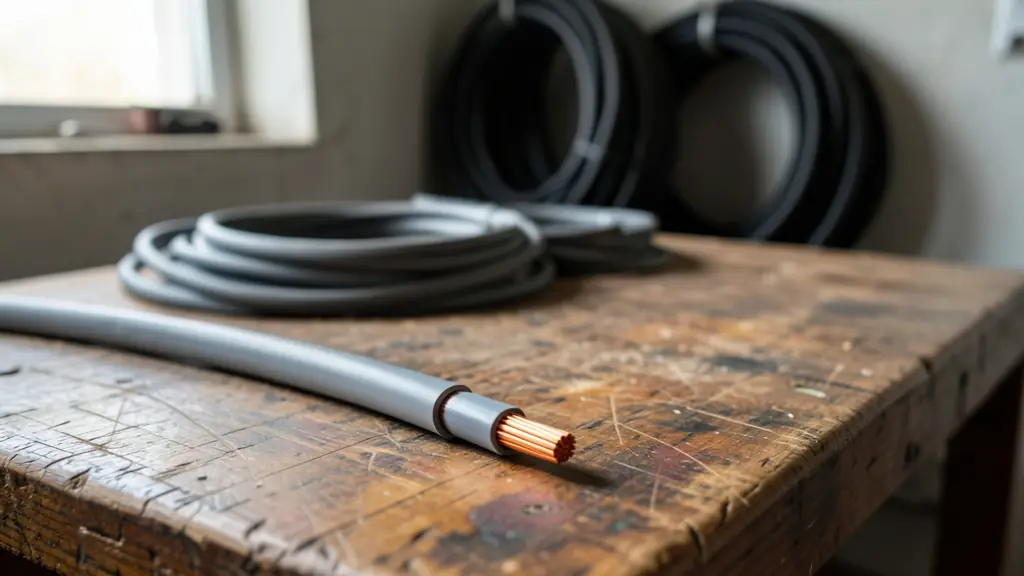
Electrical cable is the one item on a job you cannot swap out cheaply later, because once it is pulled through conduit or plastered into a wall it stays there for decades. Buying it well comes down to three things: the right type for where it runs, the right size for the load and the distance, and real copper of the size printed on the sheath. Here is how South African electricians and counter staff think about it.
Price guideAbout R22 a metre on a 100 m roll to R28 a metre cut to length for 2.5 mm² surfix, about R18 a metre for 1.5 mm², and more for thicker or armoured cableA rough guide from published South African prices. The area, the term, the grade, what is included and VAT all move it.
The cable types you will be offered
- Surfix (flat twin and earth): the grey or white flat cable for house circuits, clipped in the roof or pulled through conduit.
- House wire: single core PVC insulated wire, always pulled through conduit, ordered one colour per roll.
- Panel flex: fine stranded single core for wiring inside a DB or a control panel.
- Cab tyre: rubber or PVC sheathed flexible cable for appliance leads and extension leads, not for fixed wiring in walls.
- SWA armoured cable: steel wire armour for underground runs to a cottage, a gate motor or a borehole pump.
- XLPE: cross linked insulation that runs hotter, used for big feeds and three phase supplies.
- Solar DC cable: UV resistant red and black cable from the panels to the inverter.
Which size for which circuit
In a typical house the lights run on 1.5 mm² behind a 10 A breaker, the plugs on 2.5 mm² behind a 16 or 20 A breaker, the geyser commonly on 2.5 or 4 mm², and the stove on 4 or 6 mm² behind a 32 A breaker. 10 or 16 mm² usually feeds a sub board or a flat. Length matters as much as current: a 2.5 mm² feed that is fine over 15 m can drop too many volts over 60 m to a garden workshop. Run your numbers through the cable size calculator, then let the electrician confirm, and size the circuit breakers to the cable you chose.
Electrical cable price per metre or per roll
Counters sell by the metre cut off a drum, or in 100 m rolls, which usually work out cheaper per metre. The price moves with the copper price, so quotes are often valid for a few days only. Before you compare two prices, check that both are full copper (not copper clad aluminium), that the stated size is the real conductor size, and that the cable carries a recognised standard mark. Cheap "2.5 mm²" surfix that turns out to be closer to 2 mm² of copper runs hot and fails a COC inspection.
Choosing house wire colours
If the job uses conduit, order house wire in red or brown for the live, black or blue for the neutral and green and yellow for the earth, plus extra colours for switch wires on lighting circuits. The cable colour code page shows old and new colours side by side, and the conduit pipe page explains how many wires fit in a 20 mm tube.
Who asks for this
- Homeowners and tenants
- A new plug circuit for the garage, or a longer run to a granny flat.
- Landlords and body corporates
- Rewiring tired flats between tenants, and feeds to new prepaid sub meters.
- Builders and renovators
- The full cable schedule for a new house, priced against the electrician's takeoff.
- Electricians and installers
- Rolls of surfix and house wire on account, delivered to several sites a week.
- Shops, offices and restaurants
- Extra circuits for a shop fit out, a kitchen line or a server cupboard.
- Factories, mines and plants
- Armoured and XLPE feeds to machines, compressors and three phase sub boards.
- Farms and lodges
- Long armoured runs to a borehole pump, a cold room or the worker houses.
- Schools, clinics and municipalities
- Cable for a school classroom block or a clinic extension, priced on a tender list.
Frequently asked questions
What does 2.5 mm electrical cable cost per metre?
It depends on the type (surfix or house wire), that week's copper price and the quantity: a few metres off the drum costs more per metre than a sealed roll. Ask for the price per metre and per 100 m roll, with VAT and delivery, so you can compare like with like.
Can I use surfix underground to a cottage?
No. Buried runs need armoured cable or cable in a suitable duct, at a proper depth. Ask the electrician who will connect and certify it which cable and route they want before you buy.
Is 6mm electrical cable enough for a stove and oven?
It is a common size for a stove circuit, but the electrician works it out from the stove's kW, the distance to the DB and the way the cable is laid. Do not choose the breaker first and the cable afterwards.
Do you sell the cable?
No. We forward your cable list to independent wholesalers, who quote stock, price per metre and delivery themselves.